Athens Metro
Athens, Greece
ActiveAthens Metro Lines (3)
Athens Metro Overview
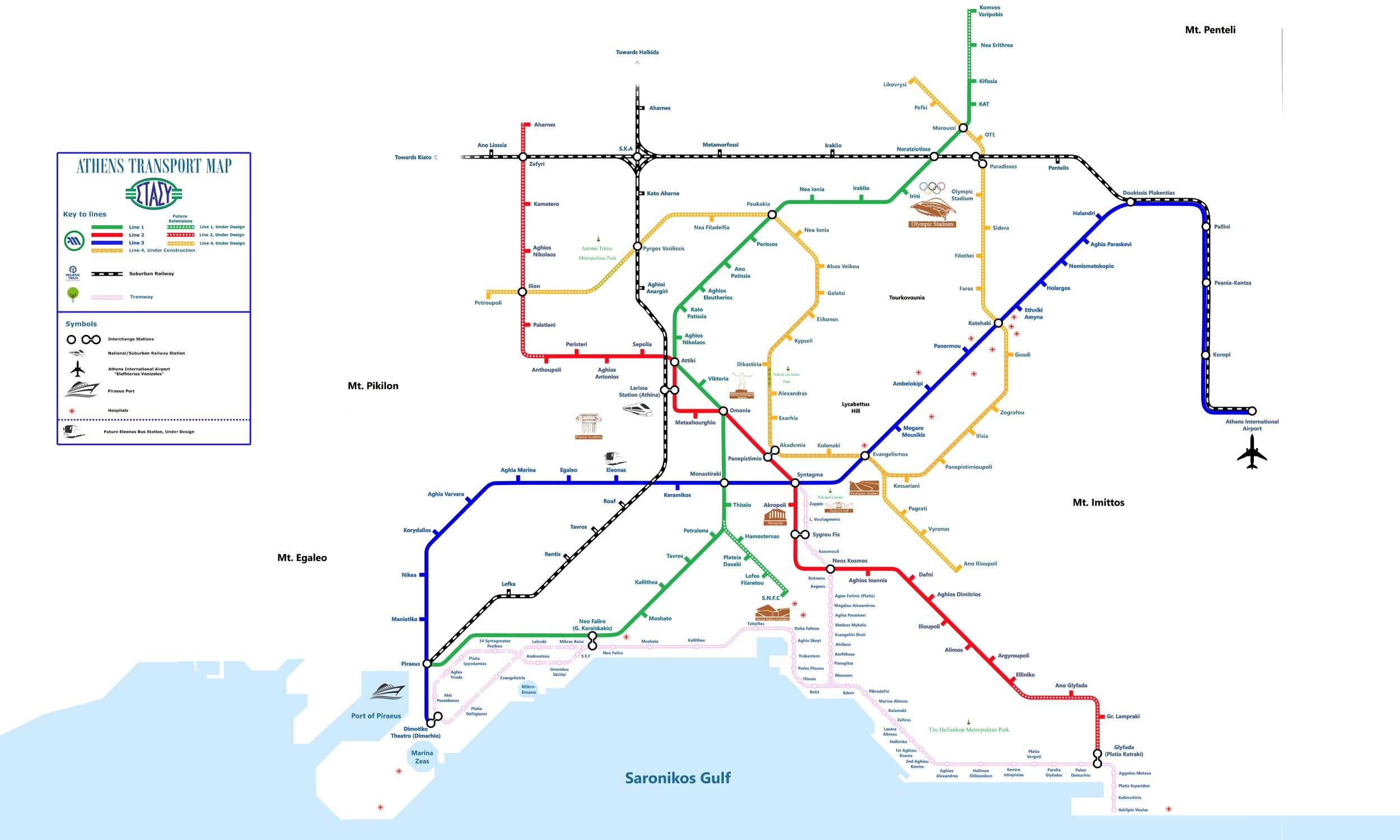
The Athens Metro is a rapid-transit system in Greece that serves the Athens urban area. The Athens Metro consists of three operational lines totaling 91.7 kilometers (57.0 mi) and 66 stations – Line 1 in green, Line 2 in red, and Line 3 in blue – the metro brings life to residents and visitors alike. It serves as a transit line, providing a fast and efficient means of travel. STASY owns and operates 62 of the 66 stations: three other stations (Palini, Piania-Kantza and Koropi) belong to GAIAOSE and Athens Airport station belongs to the operator of Athens International Airport. The system has five interchanges, Attiki, Monastiraki, Omonia, Piraeus and Syntagma, allowing all three to interchange with each other at least once. Each line also has at least one connection to the Athens Suburban Railway and the Athens Tram.
Athens Metro Key Facts
- The Athens Metro consists of three operational lines, namely Line 1 (green), Line 2 (red), and Line 3 (blue), which connect different parts of the city and serve both residents and tourists.
- The past few years have seen expansion in the metro system, with plans for further development underway to accommodate the growing transport needs of the Greek capital.
- During the construction of the Metro, several archaeological discoveries were unearthed, leading to the creation of the Antiquities in the Metro program, where artifacts are displayed at selected stations.
- Some sections of the Athens Metro are constructed deep underground, using tunneling methods to navigate the city's complex landscape.
- The Athens Metro integrates seamlessly with other forms of public transportation, including buses and trams, providing travelers with a well-connected transit network.
- Many of Athens' metro stations feature artistic elements, including sculptures, mosaics and installations, which add a cultural dimension to the commute experience.
- The Athens Metro incorporates environmentally-friendly practices, contributing to the city's efforts to promote sustainable and responsible urban development.
- The metro system serves a large number of daily commuters, contributing to the efficiency of Athens' overall transportation network.
- Construction of Line 1 was accelerated to prepare for the 2004 Summer Olympics held in Athens, providing an additional transportation option for the event.
Athens Metro Map