Buenos Aires Underground
Buenos Aires, Argentina
ActiveBuenos Aires Underground Lines (7)
Buenos Aires Underground Overview
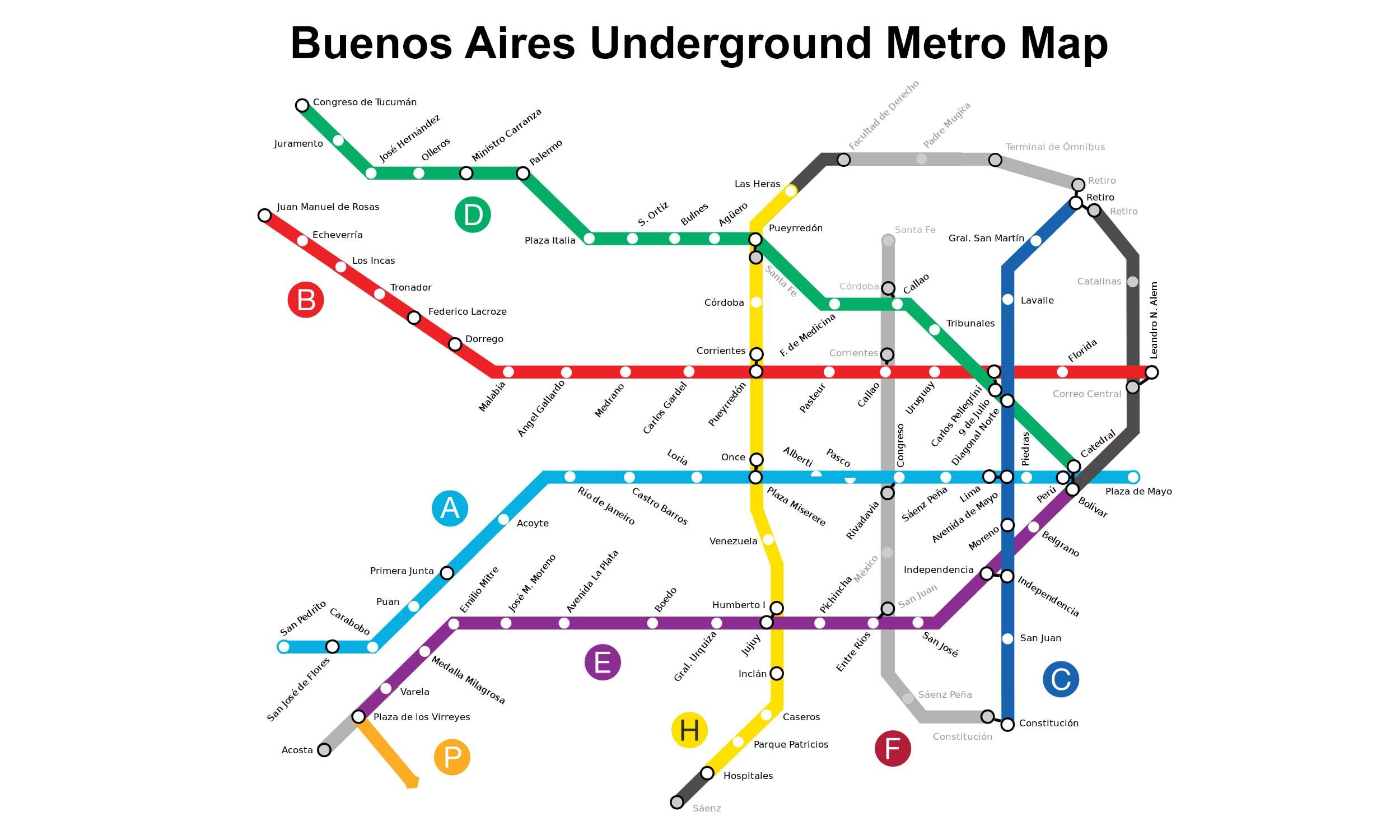
The Buenos Aires Underground, Argentina's first and oldest metro system, set out on its inaugural journey on December 1, 1913, making it the first metro system in the Southern Hemisphere. Initially known as PreMetro, the system was established to address the growing transportation needs of Buenos Aires and provide a modern and efficient method of urban transit. Currently, the underground network has six lines—A, B, C, D, E and H—covering 56.7 kilometers of route serving 90 stations. The network is complemented by a 7.4 kilometer long premetro line and a 26 kilometer long Urquiza suburban line, with a total of 17 more stations. Traffic on the lines runs on the left because Argentina ran on the left when the system opened. More than one million passengers use the network, which also provides connections with the city's extensive commuter rail and bus rapid transport network. With its deep history, diverse lines, and ongoing efforts to modernize and expand, the Buenos Aires Underground remains an important component of the city's public transportation network, playing a vital role in the daily lives of millions of residents and visitors.
Buenos Aires Underground Key Facts
- The Buenos Aires Underground, commonly known as the Sabate, officially opened on December 1, 1913, becoming the first subway system in the Southern Hemisphere and one of the oldest in the world.
- Line A, the first line of the Sabate, initially operated with wooden cars and provided service between Plaza de Mayo and Plaza Miserere, covering a distance of approximately 7 kilometers.
- The Sabate consists of six lines labeled A to H, each identified by a unique letter and color, forming an extensive network that crosses the city and its suburbs.
- Sabate has several stations with historical significance, including the iconic Peru station on Line A, which displays preserved original tiles and architecture.
- Many subway stations contain artistic elements, including murals, sculptures, and mosaics, which add a cultural and aesthetic dimension to the underground experience.
- There have been expansion and modernization efforts at Sabate, with ongoing projects aimed at expanding lines, upgrading infrastructure, and incorporating new technologies.
- Some stations, such as Carlos Pellegrini on Line B, are known for their beauty and architectural design, attracting attention for their historical and aesthetic value.
- The Sabte is a widely used mode of transportation, serving the daily commuting needs of millions of residents and visitors to Buenos Aires.
- Some stations, such as the combination of Carlos Gardel and Pueyrredón on Line B, serve as important transfer hubs, facilitating easy transitions between different subway lines.
- The Sabate is integrated with the extensive network of buses in Buenos Aires, providing passengers with a comprehensive and interconnected public transportation system.
Buenos Aires Underground Info
- Operator Subterráneos de Buenos Aires S.E. (government corporation)
- Operation Started 1913
- Total Lines 7
Buenos Aires Underground Map