Los Angeles Metro
Los Angeles, United States
ActiveLos Angeles Metro Lines (6)
Los Angeles Metro Overview
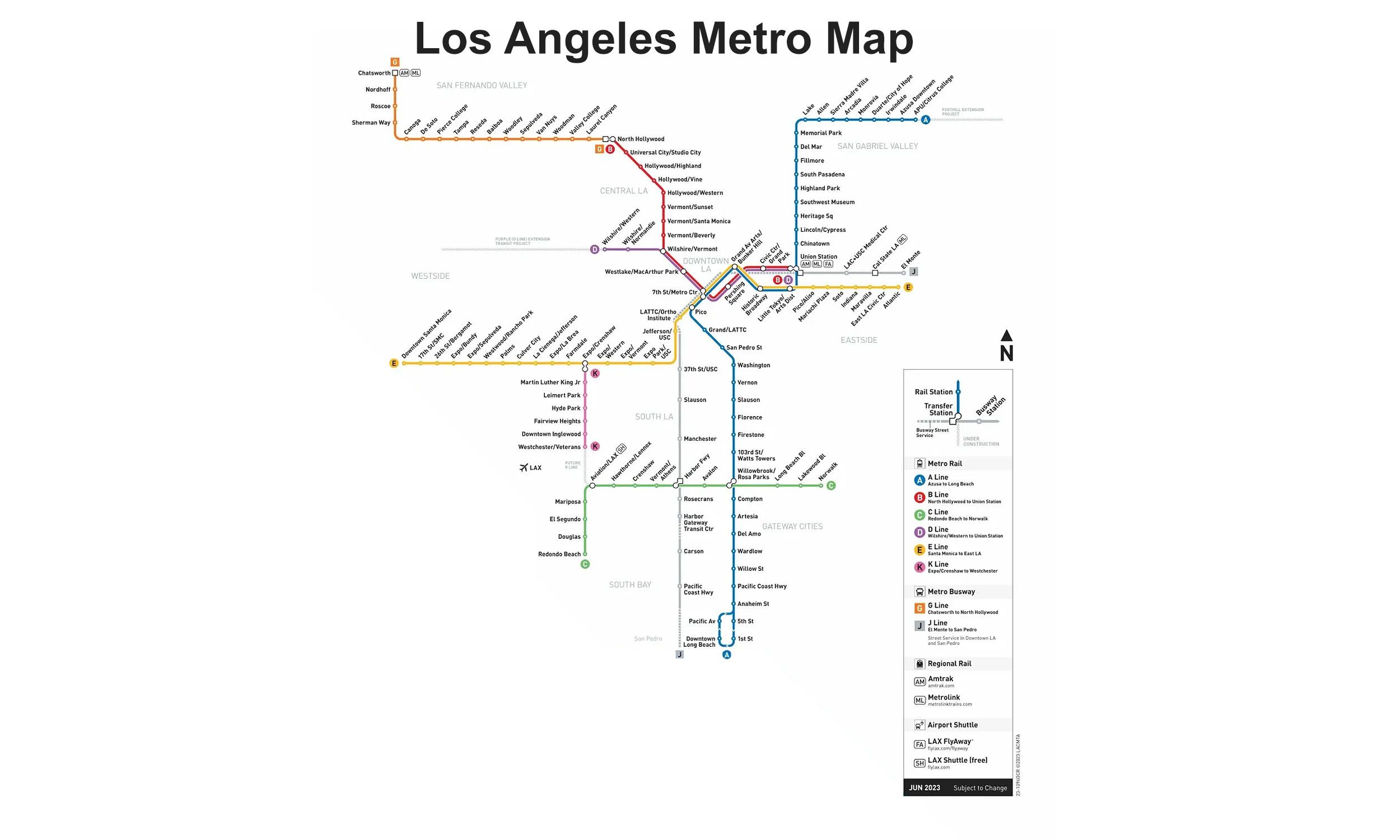
The Los Angeles Metro, a vital component of Southern California's vast transportation network, began its inaugural journey on January 30, 1990 with the opening of the Blue Line. Metro Rail is an urban rail transit system serving Los Angeles County, California in the United States. It consists of six lines, including four light rail lines, and two rapid transit lines serving 101 stations. It connects to the Metro Busway bus rapid transit system (G and J lines), the MetroLink commuter rail system, and several Amtrak lines. Metro Rail is owned and operated by the Los Angeles County Metropolitan Transportation Authority (Metro). As the system continues to evolve, with ongoing expansion projects and innovations, the Los Angeles Metro stands as a testament to the city's dedication to creating a more accessible, efficient, and interconnected urban environment.
Los Angeles Metro Key Facts
- The Los Angeles Metro, officially known as the Los Angeles County Metropolitan Transportation Authority (LA Metro), began operations on January 30, 1990 with the opening of the Blue Line.
- Metro boasts an extensive rail network, including iconic lines like the Red Line, Purple Line, Gold Line, and Expo Line, which connect different neighborhoods in Los Angeles County.
- The metro consists of both subway and light rail lines, with subway sections serving Downtown Los Angeles and light rail lines extending to various suburbs.
- The LA Metro is one of the busiest transit systems in the United States, serving significant daily ridership and playing a central role in meeting the region's transportation needs.
- LA Metro has introduced innovative fare payment methods, including the TAP Card, a contactless smart card that allows seamless transfers between buses and trains within the system.
- The metro is undergoing major expansion projects such as the Purple Line extension, which aims to increase connectivity and provide more efficient transit options.
- LA Metro is committed to sustainability with initiatives such as the deployment of electric buses, promoting eco-friendly practices, and investing in infrastructure consistent with environmental goals.
- Union Station serves as a major transit hub, connecting various subway lines to Amtrak, Metrolink, and other regional transit services.
- The subway has become a cultural icon of Los Angeles, appearing in films, TV shows, and music videos, contributing to the city's identity and shaping its public transportation narrative.
Los Angeles Metro Map