London Underground
London, United Kingdom
ActiveLondon Underground Lines (33)
London Underground Overview
The London Underground, colloquially known as the Tube, began its transformational journey beneath the bustling streets of the British capital on January 10, 1863. The London Underground has grown into an extensive and complex network, consisting of 11 lines spanning approximately 402 kilometers (250 mi) and serving over 270 stations. Beyond its utilitarian purpose, the Tube has become an iconic symbol of London, with architectural diversity, a distinctive circular logo and a map design that has influenced metro systems around the world. Its deep-level tunnels, historic stations and cultural impact underline its importance in shaping the character of the city and its commitment to providing efficient and accessible transport for millions of passengers every day. The London Underground remains a testament to the ingenuity of Victorian engineering and an important component of the rich tapestry of London's history and modernity.
London Underground Key Facts
- The London Underground, also often called the Tube, opened its first section on January 10, 1863, making it the world's first underground subway system.
- The London Underground is one of the largest metro systems globally, with 11 lines covering approximately 402 kilometers (250 mi) and serving more than 270 stations.
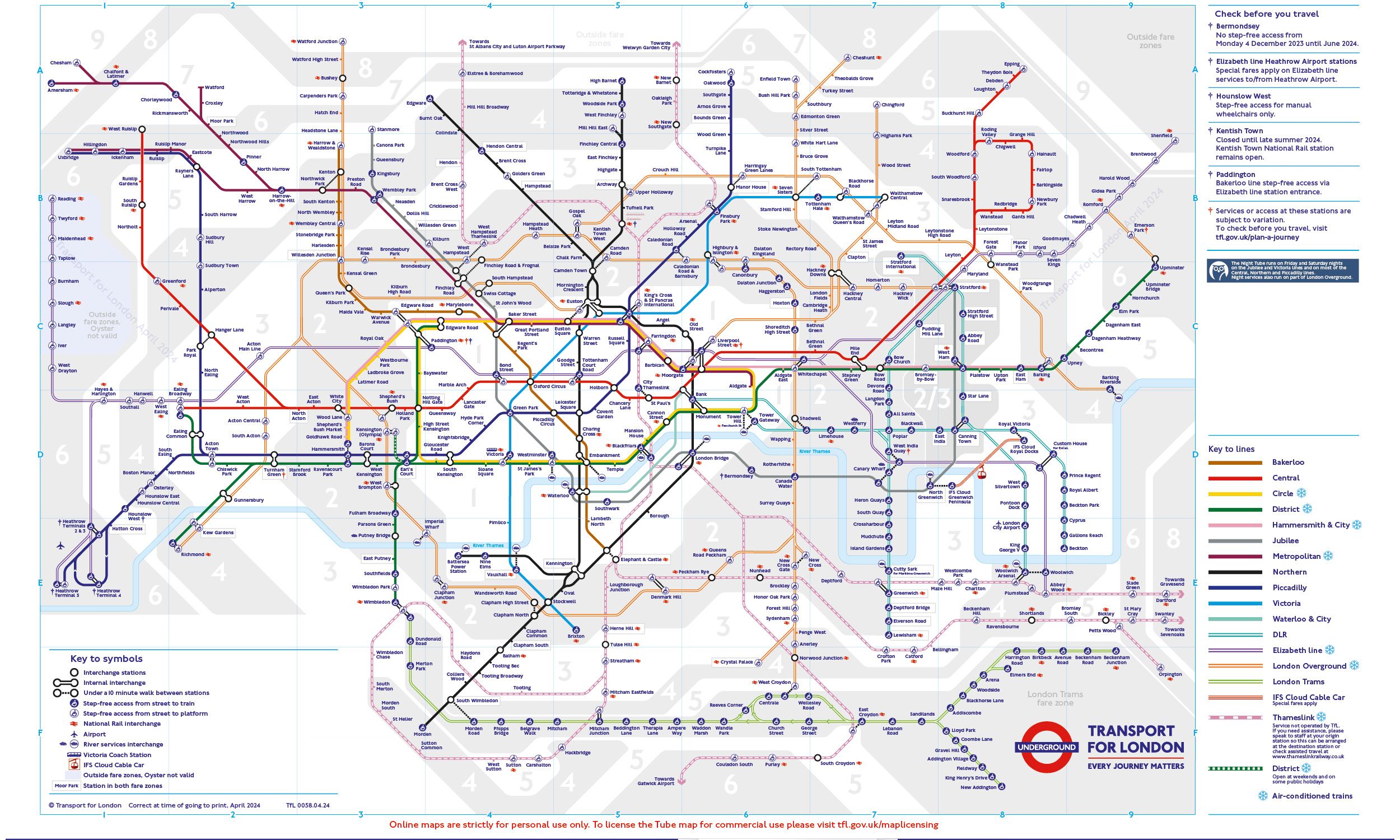
- The London Tube Map, designed by Harry Beck in 1931, is renowned for its simplicity and clarity, influencing metro maps around the world.
- Some sections of the London Underground operate at considerable depths, with the Waterloo and City line being one of the deepest, reaching a depth of about 23 meters (75 ft).
- The Underground has a mix of architectural styles, reflecting its historical development from Victorian era stations to modern designs such as the Jubilee Line extension.
- The Tube uses a variety of rolling stock, including the iconic red trains, which vary in design and technology across different lines.
- The famous roundel, a red circle crossed by a horizontal blue stripe, is synonymous with the London Underground and serves as its official logo.
- Waterloo station is one of the busiest stations on the network, with millions of passengers passing through it each year, highlighting the Underground's central role in London's transport.
- London Underground has developed a unique set of etiquette norms, which include standing on the right side of the escalator and allowing passengers to disembark before boarding.
- The Tube has made a significant cultural contribution, appearing in numerous films, literature and art, and its distinctive announcements and sounds are iconic elements of the London experience.
London Underground Info
- Operator London Underground Limited
- Operation Started 1863
- Total Lines 33
London Underground Map