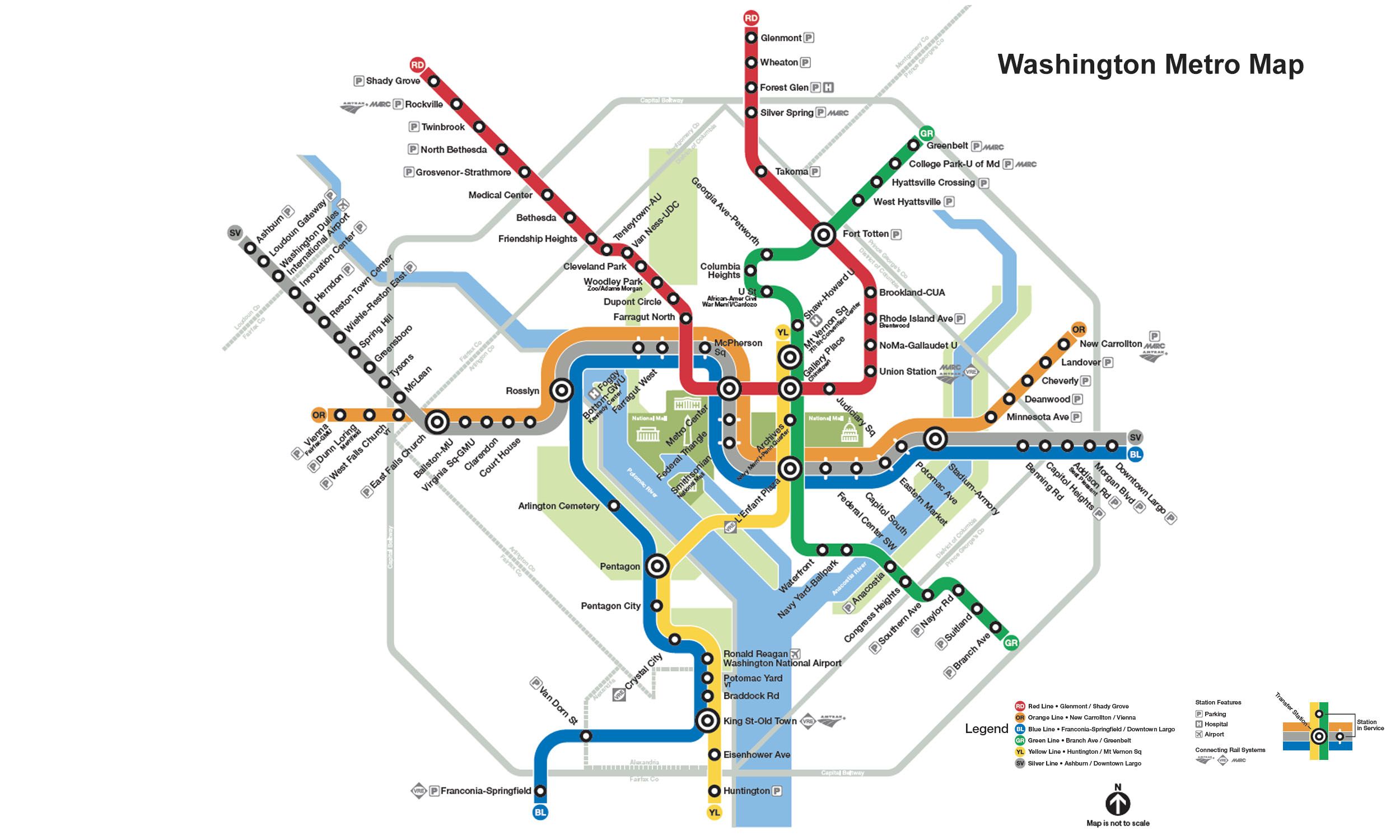
Washington Metro
Washington, United States
ActiveWashington Metro Lines (6)
Washington Metro Overview
The Washington Metro, often abbreviated to Metro and formally Metrorail, is a rapid transit system serving the Washington metropolitan area of the United States. The Washington Metro began operations on March 27, 1976, marking a historic milestone in the urban development of the region. Over the years, it has expanded to include a total of six lines, namely Red, Blue, Orange, Silver, Green and Yellow, providing comprehensive coverage throughout the city and neighboring jurisdictions in Maryland and Virginia. With its distinctive color-coded lines and iconic stations, the Washington Metro has become a symbol of the nation's capital, facilitating daily commutes for residents, workers, and visitors. Beyond its role as a transportation network, the Washington Metro has contributed to the region's connectivity, influencing urban planning, and supporting sustainable transit-oriented development.
Washington Metro Key Facts
- The Washington Metro, commonly known as Metrorail, began operations on March 27, 1976, with the opening of the original Red Line.
- The Metro system consists of six color-coded lines: Red, Blue, Orange, Silver, Green, and Yellow, which serve Washington, DC, Maryland, and Virginia.
- Many metro stations have unique and modern architectural designs, with notable architects contributing to the aesthetic appeal of the system.
- Farragut North and Farragut West stations, located near the White House, are among the deepest stations in the system, reaching depths of more than 100 feet.
- The Washington Metro consists of both underground and elevated sections, offering passengers a mix of underground and above-ground travel experiences.
- The subway system is complemented by the Metrobus network, creating an integrated public transit system that serves the broader Washington, D.C., metropolitan area.
- Major transfer stations, such as Metro Center, allow passengers to seamlessly switch between different lines, facilitating efficient travel throughout the region.
- The Washington Metro provides a convenient connection to Ronald Reagan Washington National Airport via the Yellow and Blue lines.
- During rush hour, to accommodate greater numbers of passengers, the metro system operates with increased frequency, known as Rush+ service.
- The Washington Metro has played a significant role in shaping the urban development of the DC metropolitan area, influencing land use, and encouraging transit-oriented development around its stations.
Washington Metro Info
- Operator Washington Metropolitan Area Transit Authority (WMATA)
- Operation Started 1976
- Total Lines 6
Washington Metro Map